Hear ye hear ye, SightRead.org got a big, HUGE, update: it now does melodies, not only rhythms.

That one above is from this link: sightread.org/?sight-reading#lp=third&y=yes&cn=yes&ts=44,68,58x&tc=1&pb=1&l=3. Click "Another!" and you get a new one with the same settings. Remember, all settings are bookmarkable.
From easy to weird
To accomodate us who still struggle with sight reading there are settings like "no leaps" in the melody(default), leaps only in the tonic or the dominant triad, always start on DO, etc., just like a text book would do.
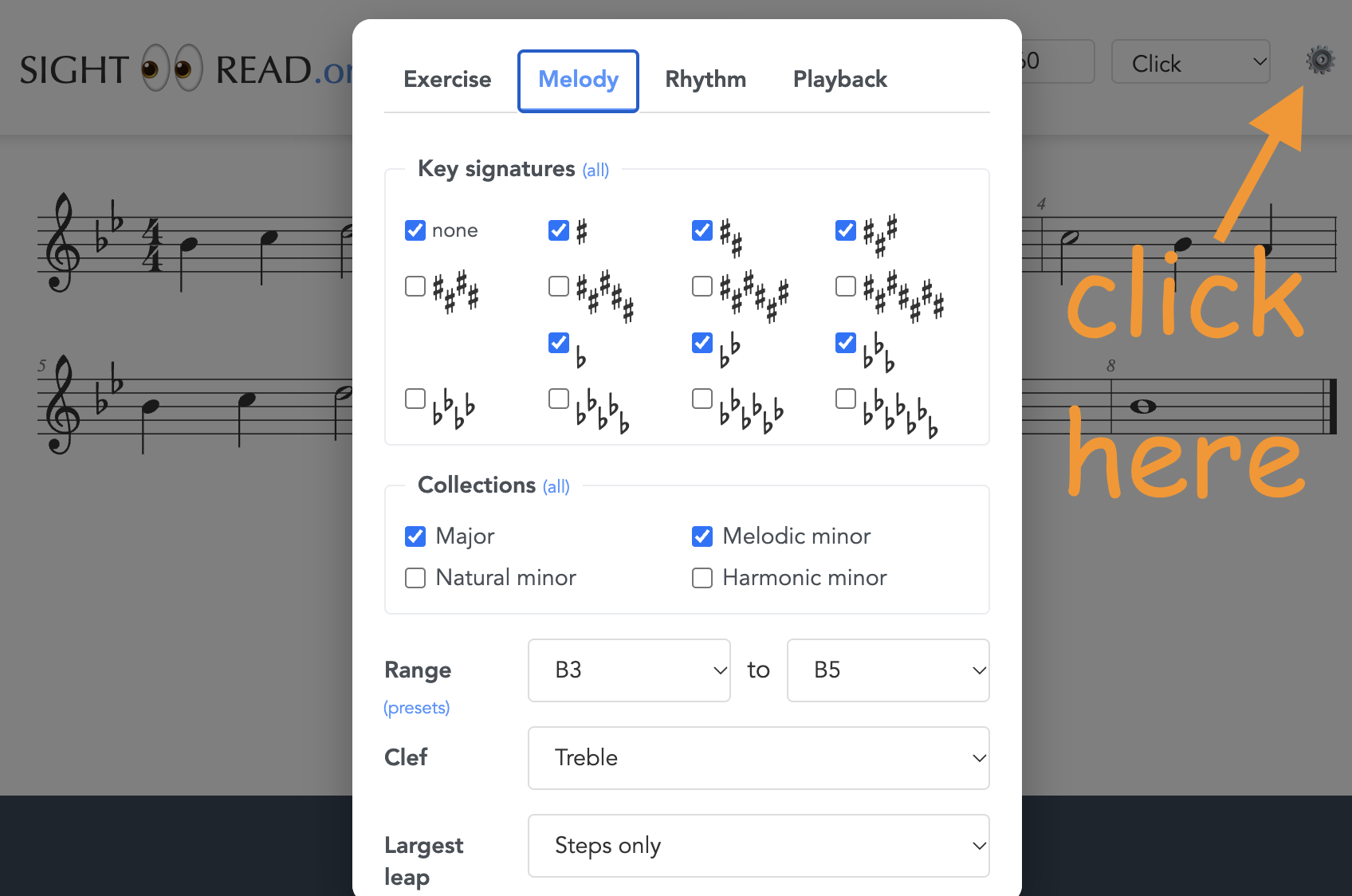
The default is steps only, kinda boring but that's how you start, no?
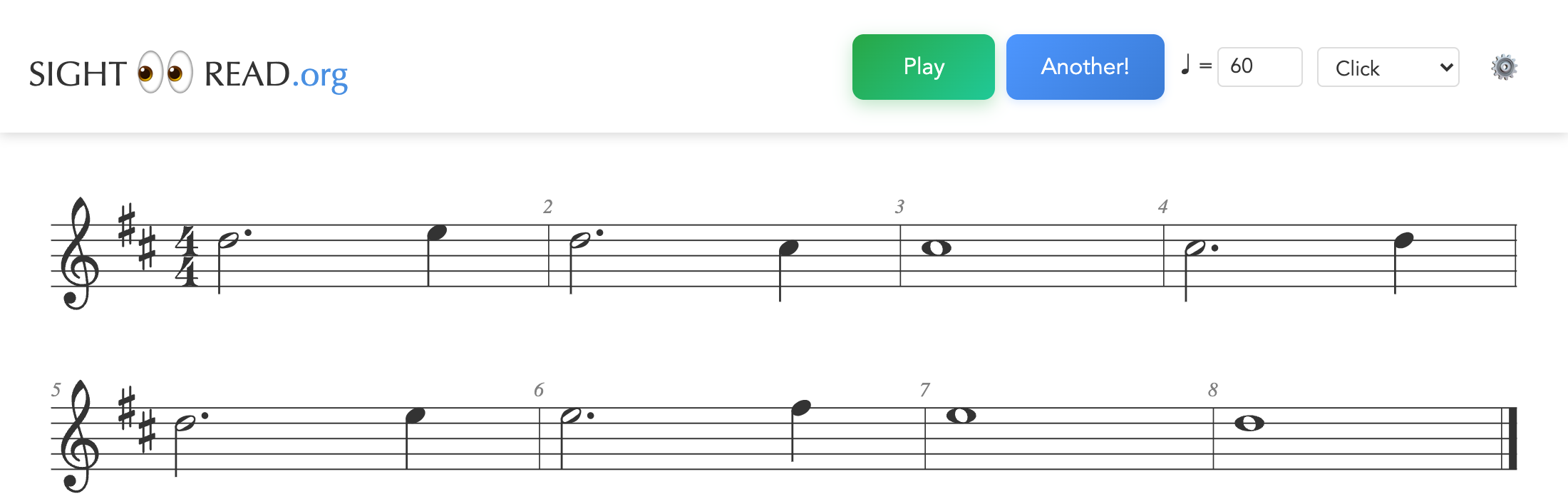
Some links to play with:
- Default, steps only: sightread.org/?sight-reading
- Leaps up to a fifth but only within the tonic triad (do-mi-sol): ?sight-reading#lp=fifth&la=tonic
- Leaps in the dominant triad (sol-ti-re), start on sol: ?sight-reading#lp=fifth&la=dominant&so=sol
- All minor flavors, no major: ?sight-reading#co=naturalMinor,harmonicMinor,melodicMinor&lp=third
- More adventurous melodies, wider range, more leaps: ?sight-reading#lp=sixth&v=adventurous
Not only treble clef
The ranges of the melodies can be set by you, and there are even some presets for various instruments and voices. Bass clef, alto clef, tenor clef, etc. Transposing instruments too, the playback is transposable, so a B♭ trumpet's written C plays back as a B♭. Here's cello in 3/4:
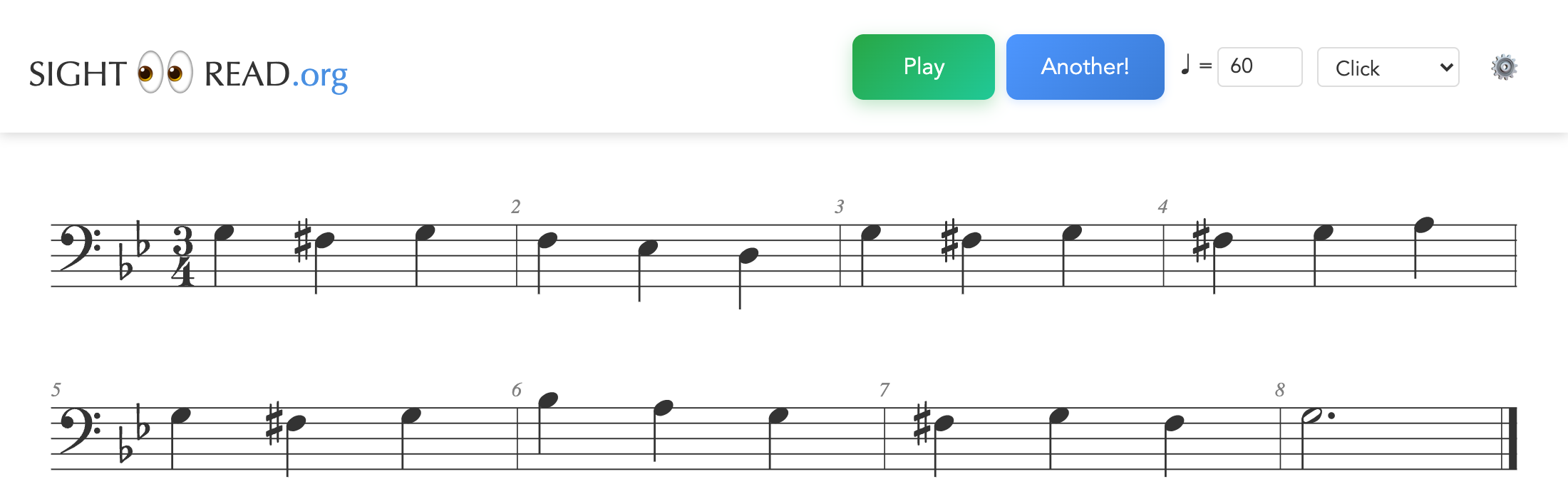
- Cello: ?sight-reading#r=C2-A4&cl=bass&lp=fourth&la=tonic&ts=34
- Viola, alto clef: ?sight-reading#r=C3-A5&cl=alto&lp=third
- Trumpet in B♭: ?sight-reading#r=G3-C6&tr=-2&lp=third
- Alto voice: ?sight-reading#r=F3-D5&lp=third
The rhythm parts
The rhythm parts are very advanced (if you want), stuff like mixing 7/8 and 4/4 in the same exercise, ninetuplets, etc. All the rhythm stuff from the previous posts works with melodies too, except the made up "levels" are more gentle when sight reading melodies vs rhythm-only.
- 7/8 and 4/4 in the same exercise: ?sight-reading#ts=44,78x&tc=1&l=3
- Ninetuplets (and septuplets) of sixteenths: ?sight-reading#up=q,h,ee,7s,9s
Chords, pad, dynamics
The exercise playback can play background synth pad for more musical experience. You can also see chord names of said pads. There are dynamics too... and, again, all settings are bookmarkable. See the practice URLs post for every setting you can put in a link.
And I tried to make the melodies musical. To start with, the harmonies are based on common practice period. And there are attempts to make the melodies more sensical with repetition, variation, sequencing where possible. Periods and sentences, stuff like that. Look at the screenshot up top: measure 5 repeats measure 1, the second phrase goes higher, and it all lands on a G7 to Cm cadence at the end. Hardly Mozart, but not random notes either.
How all this works deserves its own post. Or a few. Coming soon!
Hidden complexity and quests
Most of the complexity is hidden behind the gear/settings icon. The initial UI (and music!) is intentionally simple. But fear not, it has more features than Haydn has symphnies.
Oh and it can do dictation too. Click on the logo to try the different "quests" (sight reading, rhythm reading, dictation)
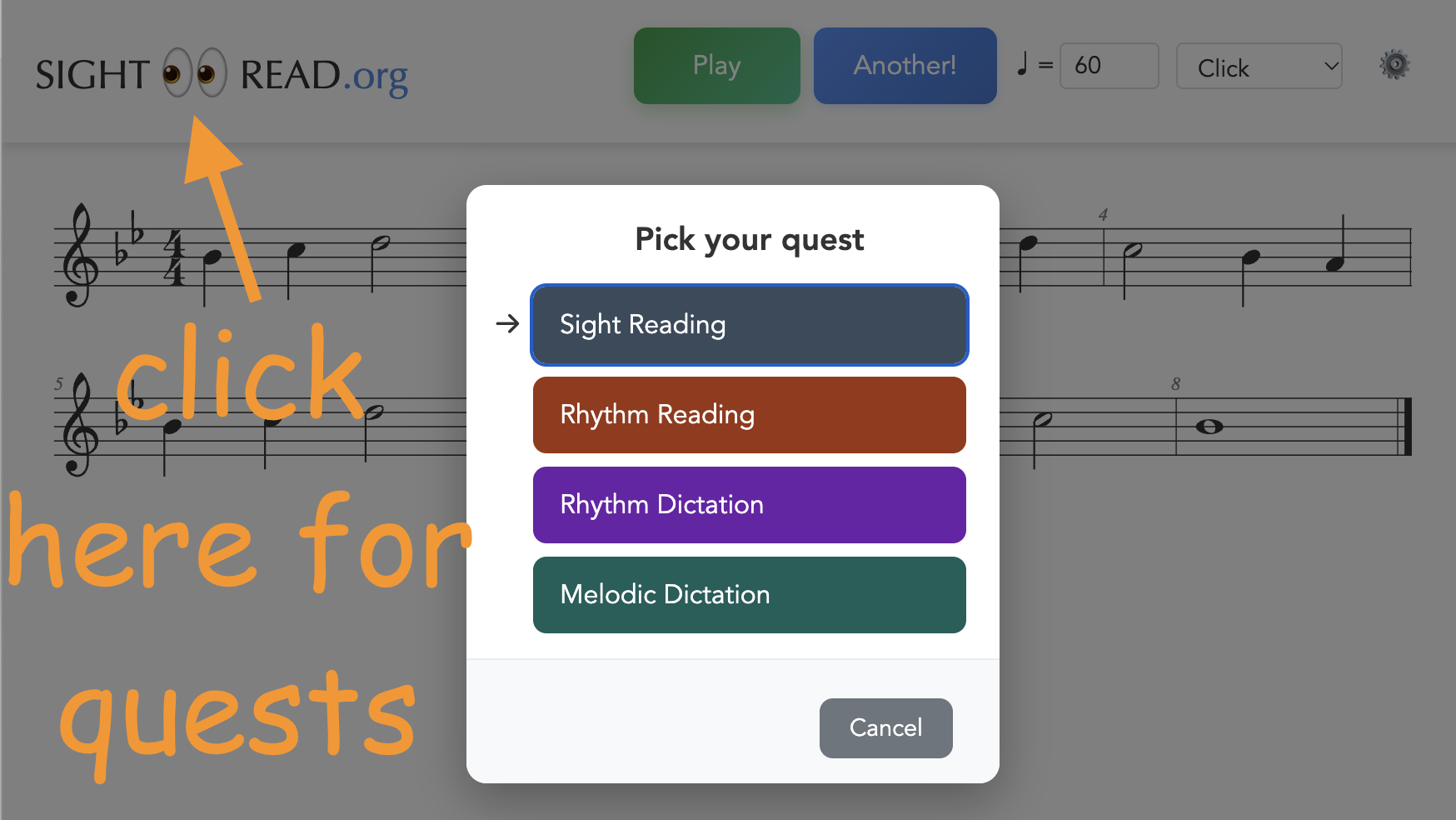
- Sight reading (the default now): sightread.org/?sight-reading
- Melodic dictation, hear it, write it down, then reveal: sightread.org/?melodic-dictation
- Melodic dictation, a bit harder: ?melodic-dictation#l=2&ks=0,1,-1&co=major,naturalMinor&lp=third
- Good old rhythm reading: sightread.org/?rhythm-reading
- Rhythmic dictation: sightread.org/?rhythm-dictation
More details to come in future posts: how the melodies get made, the harmony, the instrument presets, melodic dictation... Stay tuned.
Works offline
On your phone, add to home screen, turn off the world (the internet) and...
Happy sight reading! 👀